How to Study When You Have Zero Motivation
Got zero motivation to study? Here's why it happens and 9 science-backed, low-effort ways to start anyway — even on your lowest-energy days.
You know the exam matters. You know you should be studying right now. And yet you're staring at your notes like they're written in another language, scrolling, snacking, cleaning things you never normally clean — anything but starting.
Zero motivation doesn't mean you don't care. It usually means your brain is tired, overwhelmed, or trying to avoid an uncomfortable feeling, not that you're lazy or broken. The fix isn't to wait until you "feel motivated" again.
The science is pretty clear on this: motivation often comes after you start, not before. This guide breaks down why your motivation disappeared, how to trick yourself into starting in the next 5 minutes, and how to make even a low-energy study session actually count.
Table of Contents
- Summary
- Why do I have zero motivation to study even when the exam matters?
- Is it laziness or is something else going on?
- How do I start when starting feels impossible?
- What's the fastest way to trick your brain into studying?
- How can I make a 5-minute study session actually count?
- What environment and habits kill motivation without you noticing?
- How do I stop the guilt spiral and keep going?
- What study methods work best on zero-motivation days?
- How OneStudy Helps When You Have Zero Motivation
- How do I get back on track today, even with zero motivation?
Summary
According to UNC Learning Center, over 70% of college students report that procrastination affects their academic performance because they struggle to self-regulate when working from dorms and apartments. According to Thomas Frank, 4 evidence-based practices — including the 5-minute rule and lowering activation energy — can restart studying even when motivation is at 0%. According to Verywell Mind, behavioral activation shows that taking action first increases motivation by more than 60% compared to waiting to feel ready. According to The Insight Centre, students who set clear, curiosity-based goals are 2x more likely to sustain focus than those using vague "I have to study" goals. According to City University of Seattle, students who study in a dedicated space with time-blocking retain material up to 50% better than those who study where they sleep.
Why do I have zero motivation to study even when the exam matters?
Because your brain cares about threat and effort, not just your GPA. When a task feels huge, vague, boring, or likely to make you feel incompetent, your brain's natural response is to avoid it. That avoidance feels like "zero motivation."
The motivation myth: why motivation follows action, not the other way around
We tend to think of it as: motivation -> action -> result. The research on behavioral activation flips it: action -> result -> motivation. As Verywell Mind explains, you don't wait to feel like going for a walk — you go for a short walk and then you feel more energized.
Thomas Frank makes the same point in his zero-motivation guide: you can't think your way into motivation, you have to act your way into it [S1]. The tiniest action creates momentum.
🎯 Key Point: You don't need motivation to start. You need a start to get motivation.
Common drains: fatigue, overwhelm, unclear goals, fear of failure
The Insight Centre and UNC Learning Center list almost identical killers: poor sleep, stress, no clear plan, and fear of doing badly. Any one of them will tank your drive.
Ask yourself which one is loudest today:
- Fatigue: Did you sleep less than 7 hours, pull an all-nighter, or have 3 coffees and no real food?
- Overwhelm: Is your to-do list actually "study everything for Bio 201"?
- Unclear goals: Do you know what "study" means for the next 30 minutes?
- Fear of failure: Are you avoiding starting because starting proves you're behind?
Difference between low motivation vs. burnout and when to get more support
Low motivation is usually temporary and task-specific: "I can't make myself open the textbook." Burnout is broader — exhaustion, cynicism about school in general, feeling ineffective for weeks. If you're experiencing persistent exhaustion, sleep changes, loss of interest in everything, or hopelessness, that's beyond study tactics and worth talking to a counselor, advisor, or trusted person.
⚠️ Warning: If zero motivation lasts for weeks, comes with major sleep/appetite changes, or you’re struggling to function in daily life, reach out for support now — campus counseling, student support services, or a trusted person — you don't have to white-knuckle it alone.
Is it laziness or is something else going on?
Almost always something else. The UNC Learning Center is blunt about this: most procrastination is an avoidance response to unpleasant emotions, not a character flaw [S4].
"Students can learn how to become better learners by using effective motivation strategies. Successful students know how to self-regulate." — UNC Learning Center
How procrastination is often about avoiding unpleasant emotions, not work itself
You aren't avoiding the assignment. You're avoiding the feeling the assignment triggers — boredom, confusion, anxiety about not understanding it fast enough, shame about starting late. Procrastination is mood repair in the short term.
That reframing helps because you can stop attacking yourself and start addressing the emotion: "What am I actually afraid will happen if I start?"
🔑 Takeaway: If procrastination is about emotions, self-compassion works better than self-punishment for getting back on track.
Link between self-regulation, self-efficacy, and college success
UNC's guide ties this together: students who believe they can manage tasks and see progress (self-efficacy) are far more likely to self-regulate and persist [S4]. And recent research from University of Georgia found similar: undergraduates focused on self-improvement and mastery use deeper study strategies like self-testing, instead of just skimming [S6].
This is where tools matter. When your own system for notes -> review -> test is messy, every session feels hard. OneStudy's study set maker turns whatever chaotic material you already have — PDFs, lecture slides, photos of whiteboards — into one organized place with all the study modes inside, so you don't waste motivation deciding what to do.
Quick self-check: sleep, stress, energy, task clarity
Do this 60-second audit before you try to force focus:
| Check | 0 - 2 Scale | Quick Fix |
|---|---|---|
| Sleep | 0 = exhausted, 2 = rested | 20-min walk, water, not another espresso |
| Stress | 0 = spiraling, 2 = calm enough | 3 slow breaths, write worries down for 2 min |
| Energy | 0 = drained, 2 = okay | Stand, stretch, change rooms |
| Task Clarity | 0 = no idea where to start, 2 = I know the next step | Write ONE sentence: "I will open __ and do __ for 5 min" |
If you score 0-2, fix biology/environment first. If you score 3+, you have enough to launch a 5-minute session.
How do I start when starting feels impossible?
You make the start so small your brain can't object.
The 5-minute rule and behavioral activation - commit to just starting
Both Thomas Frank and Verywell Mind recommend this: promise yourself you'll work for just 5 minutes. After 5, you have full permission to stop. Most of the time you won't want to stop, because activation energy is the hardest part.
💡 Tip: Set a timer for 5 minutes, not 25. 25 still feels like a commitment when you have zero motivation. 5 feels survivable.
This is exactly where OneStudy's Teach Me mode shines on low-motivation days. Instead of staring at a 60-slide deck, it turns your own material into a guided, interactive lesson that highlights key terms inline and drops in tiny multiple-choice checks. You don't have to decide what to learn — you just read the next step. It replaces "study Bio" with "answer this one check."
Lower the activation energy: shrink the task to one tiny next step
The Insight Centre calls this making the task achievable and specific [S2]. "Study chemistry" is too big. "Open lecture 7 PDF and write the 3 formulas on a sticky note" is doable.
Write it as: Verb + object + time limit. Examples:
- Open OneStudy and create a study set from yesterday's slides (3 min)
- Do 5 flashcards from chapter 4 (4 min)
- Summarize one YouTube lecture into 3 bullet points (5 min)
Use if-then plans and implementation intentions to remove decision-making
Decisions drain motivation. UNC recommends if-then plans: you decide BEFORE when and where [S4].
Format: IF [situation] THEN I will [tiny action].
- IF I close my laptop lid after lunch THEN I will open OneStudy and press Teach Me for 5 minutes.
- IF it's 7pm THEN I will put my phone in the kitchen and study at the library desk for 15 minutes.
- IF I feel the urge to check Instagram THEN I will do one fill-in-the-blank question first.
You borrow motivation from a future version of you who already decided.
What's the fastest way to trick your brain into studying?
You don't need willpower. You need a cue, a smaller step, and a slightly better environment.
The 2-minute launch: open one file, write one sentence, do one flashcard
The 2-minute version of the 5-minute rule:
- Open ONE file. That's it.
- Write one sentence in your own words: "Today I don't get __."
- Do one flashcard or one quiz question.
Completion creates dopamine. Dopamine creates the want to do the next one. On days you have nothing, OneStudy's AI flashcard maker is perfect for this because it auto-generates cards from your PDFs with images and math included, and tracks each from Unfamiliar → Learning → Mastered. Low friction, instant win.
Body doubling and environment change - library, cafe, study with a friend
UNC specifically calls out why your dorm room kills focus: you sleep, socialize, and avoid work in the same place [S4]. Your brain never switches to "study mode."
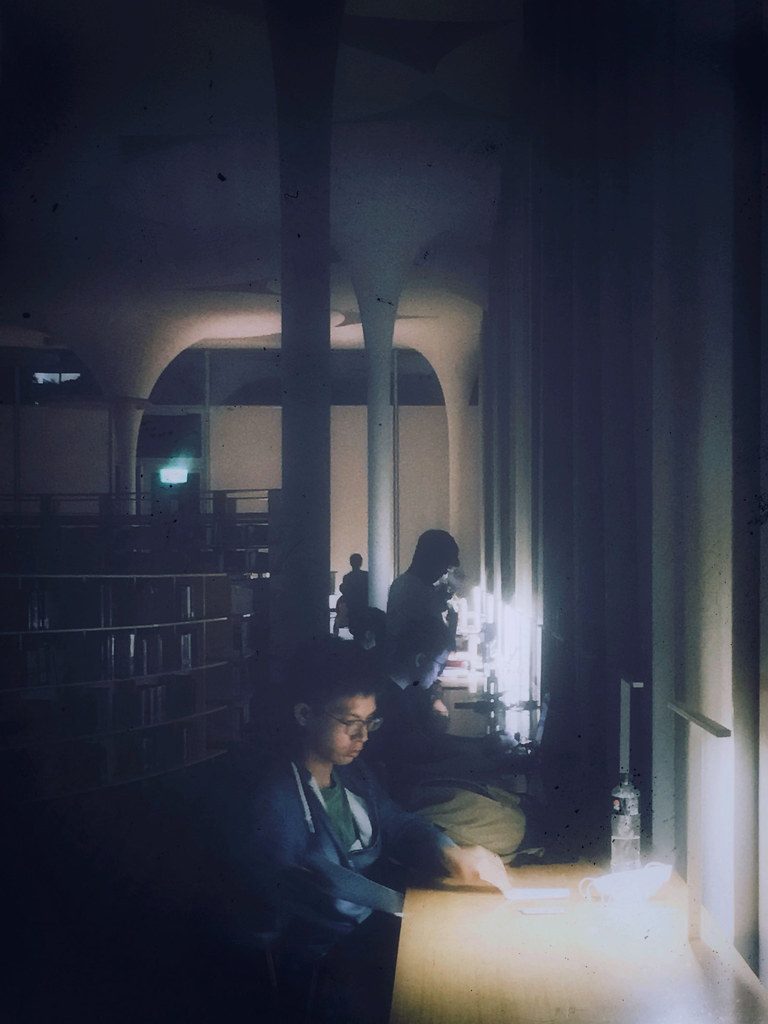
Body doubling — working alongside someone else who's also working — is one of the most reliable fixes when motivation is zero. You don't have to talk. You just have to not want to be the person scrolling while the other person works. Library, cafe, study hall, a quiet Discord study room — all count.
🎯 Key Point: Motivation is often environmental, not moral. Move rooms before you judge yourself.
Pair boring tasks with a small reward or enjoyable cue
The Insight Centre suggests pairing a low-interest task with something you do like — music, a favorite drink, a 5-minute game break after [S2]. Temptation bundling, not bribery.
Example: "I can have my iced coffee WHILE I listen to my notes as a podcast." OneStudy's AI Podcast Maker was built for exactly this — it turns your own notes or PDF into a natural-sounding podcast you can listen to walking to class, at the gym, or while tidying your room. When you have zero energy to read, you can still revise without looking at a screen.
How can I make a 5-minute study session actually count?
When you have 5 minutes and 5% energy, re-reading is the worst option. It feels like work but creates no memory.
Why active recall beats re-reading on low-energy days
Coursera's study habits guide and UGA's new study confirm the same thing: students who test themselves and make connections remember far more than those who just re-read and highlight [S6][S7].
| Passive (feels productive) | Active (actually produces memory) |
|---|---|
| Re-reading slides | Closing slides and writing 3 things you remember |
| Highlighting everything | Flashcard flip and self-grading |
| Copying notes word for word | Fill-in-the-blank in full sentences |
| Watching lecture at 2x | Doing Teach Me checks + one quiz question |
"Undergraduates who are more focused on self-improvement tend to use more critical thinking strategies like testing yourself." — University of Georgia Study
Switch from passive input to low-friction output: flashcards, fill-in-the-blank, self-quizzing
You want output methods that cost very little energy:
- Flashcards: Flip, think, grade yourself. OneStudy's flashcard maker handles the creation from your material.
- Fill-in-the-blanks: Better than isolated vocab because you recall terms in context. OneStudy's version in Study Sets forgives typos and gives you a hint instead of the answer, so you don't get stuck.
- One quiz question: Just one. OneStudy's quiz generator writes exam-grade distractors so you test understanding, not recognition.
💡 Tip: On zero-motivation days, aim for 5 cards, not 50. Mastery tracking will remember where you left off tomorrow.
Using interest and curiosity: reframe "I have to" into "what's one thing I don't get yet?"
This is the mastery vs. performance distinction from UGA's study and The Insight Centre: instead of "I have to finish everything," ask "What's one thing I'm actually curious about or confused by?" Curiosity is a far more durable motivator than pressure.
Reframes that work:
- "I have to study" → "What's the one diagram I always mess up?"
- "I have to memorize" → "Can I explain this to a friend in 30 seconds?"
- "I have to be perfect" → "Can I get 1% clearer on this topic today?"
If your material is visual — anatomy, biology, cell diagrams, maps, cycles — skip text cards for this session. OneStudy's GameLab lets you upload any labelled diagram, it blanks the labels automatically, and you play a labelling game until it sticks. It's built for exactly the days flashcards feel tedious.
What environment and habits kill motivation without you noticing?
Most motivation problems are environment problems wearing a mindset costume.
Dorm room distractions and why studying where you sleep hurts focus
Your brain associates places with activities. If you study where you sleep, scroll, and eat, it never gets a clear "focus" cue. UNC's Learning Center lists this as a top blocker: students who work from bed or couch report far more difficulty starting and staying on task [S4].
Fix: create one dedicated zone, even if tiny. Library second floor, a specific corner of a cafe, a desklamp you only turn on for study. Consistency trains the cue.
Phone, notifications, and open tabs - the UNC Learning Center's motivation blockers
UNC also names digital clutter as a motivation killer [S4]. Each ping is a micro-decision: "Should I check?" Every decision taxes self-regulation.
Ultra-low-effort fixes:
- Phone in another room, or in a drawer face-down on Do Not Disturb
- One window only: study set and nothing else
- Put a post-it over your search bar: "Finish 5 cards first, then you can Google"
🔑 Takeaway: Don't rely on discipline to ignore your phone. Make ignoring it easier than checking it.
Top good-study-habit fixes: dedicated space, time-blocking, sleep routine
CityU's study habits guide and Coursera agree on three that have the biggest ROI when motivation is low:
- Dedicated space — same place = faster start.
- Time-blocking — "7:00-7:20, Bio Teach Me lesson" on your calendar beats a vague to-do list.
- Sleep routine — consistent sleep beats a single heroic study night for memory consolidation.
If your notes are currently chaos — half-recorded audio, photos of slides, a Google Doc you haven't opened in weeks — cleaning them will kill the last drop of motivation. Skip it. Drop them into OneStudy's AI lecture note taker or PDF summarizer and it will turn the mess into structured notes with knowledge checks already embedded.

How do I stop the guilt spiral and keep going?
You fell behind. Now the guilt makes you avoid it more, which makes you more behind. Loop closed.
Self-compassion vs. self-criticism when you fall behind
Verywell Mind emphasizes self-compassion over self-criticism: treating yourself like you would a friend who's stuck isn't soft, it's more effective for restarting action [S3]. Self-criticism triggers avoidance; self-compassion lowers the threat enough to try again.
Script to try: "Yeah, I didn't do what I hoped yesterday. That makes sense — I was tired and overwhelmed. What's one tiny thing I can do in the next 10 minutes?"
Cognitive reframing from Verywell Mind: challenge all-or-nothing thoughts
Verywell Mind's cognitive reframing tactic is perfect for the guilt spiral [S3]:
- All-or-nothing: "I missed Monday and Tuesday, so the whole week is ruined" → "I missed two days, but I can still do one small session today."
- Catastrophizing: "I'm going to fail the whole course" → "I'm behind on one chapter, and I can get support for that."
- Labeling: "I'm lazy" → "I'm experiencing low motivation, which is a common and fixable state."
Progress not perfection: tracking tiny wins to rebuild momentum
Momentum loves evidence. Thomas Frank and The Insight Centre both recommend tracking tiny wins visibly [S1][S2].
Make a "done" list instead of a to-do list:
- ✅ Opened slides
- ✅ Did 5 flashcards
- ✅ Understood the Krebs cycle step 2
In OneStudy, this is tracked for you — mastery badges move from Unfamiliar → Learning → Mastered across flashcards, quizzes, fill-in-the-blank, and Teach Me, so even a 5-minute session shows up as progress you can see. That visual feedback rebuilds self-efficacy, which UNC links directly to persistence [S4].
💡 Tip: At the end of a low day, write down 3 things you DID do, not 10 things you didn't. Sleep with the win list visible.
What study methods work best on zero-motivation days?
You need methods that match low energy, not high discipline.
Ultra-low-effort options: listening, reading aloud, sorting old notes
When reading feels impossible, switch modality:
- Listen: Podcast version of your notes while walking. Use OneStudy's Podcast Maker or Text-to-Speech Reader — it reads any note aloud in a natural voice and highlights words as it goes, great for re-reading fatigue and accessibility.
- Read aloud: Speaking forces slightly more processing than silent skimming.
- Sort: Don't learn, just organize. Upload everything into one Study Set so future you has less friction.
Short, timed sprints (Pomodoro 15/5) instead of marathon sessions
Traditional Pomodoro is 25/5. On zero-motivation days, do 15/5 or even 10/2. CityU notes that intentional breaks strengthen retention and energy [S5].
Structure:
- Pick ONE tiny outcome.
- Timer 15 minutes.
- Work only on that.
- 5-minute real break — no study content.
Repeatable, not heroic. Three 15-minute sprints beats one abandoned 2-hour plan.
🎯 Key Point: On low-motivation days, shorten the sprint length, not the standard. A 10-minute win beats a 50-minute failure.
Teach-to-learn and varied formats to keep the brain engaged
Explaining a concept to someone else (even an imaginary 12-year-old) forces understanding. You can do this with OneStudy's AI tutor — it has actually read your uploaded material, so you can say "explain this diagram like I'm 12" and its answers are grounded in your syllabus, not generic web knowledge. Or ask it to quiz you using only your professor's slides.
For written subjects, if you have a draft but zero energy to edit, OneStudy's essay grader gives you rubric-based feedback on structure and argument before you submit. For problem sets where you keep getting the wrong answer and don't know where you went wrong, OneStudy's math solver shows every intermediate step so you can find the exact line that broke.
| Without OneStudy on a Zero Day | With OneStudy on a Zero Day |
|---|---|
| Spend 20 min deciding where to start | Upload files → one study set, everything ready |
| Re-read slides and remember nothing | 5-min Teach Me lesson with embedded checks |
| Stare at a blank diagram | GameLab turns it into a labelling game |
| Want to study but can't look at screen | Listen to your notes as a podcast on a walk |
| Get stuck at 2am with no one to ask | Ask AI tutor grounded in YOUR material |
How OneStudy Helps When You Have Zero Motivation
Zero motivation is a workflow problem, and OneStudy is built to lower the activation energy for every step:
-
Teach Me — when you can't face the whole chapter: Upload your slides or PDF and it builds a step-by-step interactive lesson that teaches you from your own material, highlights key terms inline, and drops in knowledge checks so you prove you got each piece before moving on. Perfect for "I read it but nothing sticks."
-
AI Podcast Maker — when you have no time or screen energy: Turns any note or lecture into an engaging podcast. Study while commuting, at the gym, cooking, or walking to class. Hands-free revision for burnout days.
-
AI Flashcard & Quiz Generator + Fill in the Blanks — when you only have 5 minutes: Auto-generates active recall tasks from your material, with imagery and LaTeX math if needed, and tracks mastery so tiny wins compound.
-
GameLab — when flashcards don't fit visual subjects: Upload any labelled diagram and it becomes an interactive labelling game you replay until every part is second nature. Ideal for anatomy, cells, geography, apparatus.
-
AI Tutor Chat and Note Taker — when you're stuck or disorganized: The tutor answers follow-ups from your syllabus at 2am, and the note taker cleans up messy recordings or braindumps into structured notes with checks embedded.
You start with one upload once, and OneStudy builds the whole study set — notes, flashcards, multiple choice, fill-in-the-blank, written test, final test, podcast, and Teach Me — so you never have to decide what to do next.
"You do not rise to the level of your goals. You fall to the level of your systems." — James Clear
How do I get back on track today, even with zero motivation?
You don't need a perfect reset. You need one small action in the next 10 minutes.
Try this 10-minute rescue protocol right now:
- Move (1 min): Stand, change rooms, water.
- Shrink (1 min): Write: "I will [tiny action] for 5 minutes in [place] at [time]."
- Launch (5 min): Set a 5-min timer, open ONE file in OneStudy, press Teach Me or do 5 flashcards.
- Log (1 min): Write down what you finished.
- Decide (2 min): Do you want to stop (and that's a win) or do one more 5?
If you have an exam soon, build a full mock with OneStudy's AI Test Maker after your first tiny win — it mixes multiple choice with free-response and grades your written answers against a rubric with specific feedback, so you can practice under real conditions without building the test yourself.
You don't have to feel ready to start. You just have to start to feel ready.
Ready to make the next 5 minutes count? Create your first free study set on OneStudy — upload your notes, slides, or lecture link and let it turn them into Teach Me lessons, flashcards, quizzes, and a podcast you can actually use today. Start free on OneStudy's signup page.
Ready to put this into practice? OneStudy's AI study tool turns your own notes, PDFs, lecture slides, and videos into interactive Teach Me lessons, flashcards, quizzes and mock exams, and even a study podcast you can listen to on the walk to class — so you spend your time on active recall instead of busywork. Start studying free.
Sources
- How to Make Yourself Study When You Have ZERO Motivation - Thomas Frank
- How to motivate yourself to study - The Insight Centre
- What to Do When You Have No Motivation - Verywell Mind
- Motivation – The Learning Center - UNC Chapel Hill
- Top 10 Good Study Habits and Tips To Develop Them - City University of Seattle
- Focusing on self-improvement, not competition, may boost grades - UGA Today
- 11 Good Study Habits to Develop - Coursera
Image credits
Photographs in this article are Creative-Commons or public-domain images, used under the licences linked below.
Stop studying harder. Start studying smarter.
Drop in your notes, PDFs, slides, or a lecture video and OneStudy instantly builds the flashcards, quizzes, and a 24/7 AI tutor that turn this advice into active practice.
Start studying free →No credit card · Used by students at leading universities
Related articles

9 Science-Backed Study Techniques That Actually Work (And How to Make Them Stick)
Stop re-reading and highlighting. These 9 research-backed study techniques use active recall and spaced repetition to help you learn faster and remember longer.
10 Best AI Study Tools for College Students in 2026
We tested the top AI tools for 2026. Here are the 10 best AI study tools for college students that actually save time, improve grades, and keep you ethical.