How to Study Smarter, Not Harder: 8 Science-Backed Habits

Stop re-reading and highlighting. Here are 8 science-backed habits — active recall, spaced repetition, Pomodoro and more — to boost retention without longer hours.
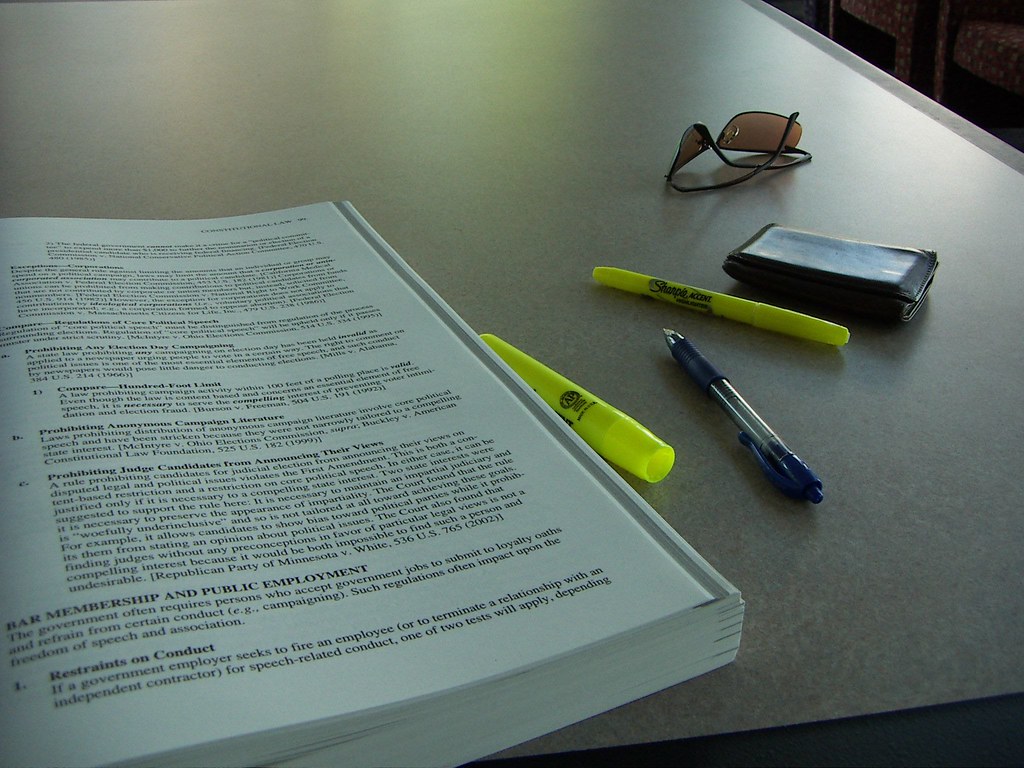
You know that feeling after three hours in the library, highlighters dry, pages covered in yellow, and still nothing sticks the next day? Longer doesn't mean stronger when it comes to learning. Your brain doesn't reward time served — it rewards how you make it work.
The good news is that the same cognitive science that explains why re-reading fails also gives us a better playbook. Top students don't necessarily study more. They study in a way that forces retrieval, space, mixing, focus, and recovery — and they design their environment so good habits are automatic.
Table of Contents
- Summary
- Why doesn't studying longer mean learning more?
- How does active recall strengthen your memory?
- Why should you space your reviews instead of cramming?
- How does interleaving make your brain more flexible?
- Why is teaching what you learned the ultimate understanding check?
- How do timed focus sprints protect you from burnout?
- How do you eliminate distractions before relying on willpower?
- Why do sleep, exercise, and stress management count as study habits?
- How can OneStudy turn these 8 habits into an automatic workflow?
- Ready to study smarter starting now?
Summary
According to NSCS Master Your Study Habits, using the Pomodoro Technique of 25-minute focus blocks with 5-minute breaks is shown to boost concentration and help avoid burnout during long study sessions. Research summarized by Friends University Science-Backed Study Techniques shows that reviewing material within 24 hours and at increasing intervals fights the brain's natural tendency to forget. As explained in Tutor Doctor How to Study Smarter, re-reading and highlighting can create an "illusion of knowing" rather than deep, lasting memory. Insights from Dr. Andrew Huberman on How I Study SMARTER, Not HARDER highlight that the best students schedule their study, eliminate distractions, and manage stress, sleep, and exercise as part of their learning system.
Why doesn't studying longer mean learning more?
We've all been taught that learning = input. Read the chapter twice. Re-watch the lecture at 2x. Highlight the important parts. It feels productive, but that feeling is misleading.
Cognitive scientists call this fluency — when something feels familiar because you just saw it, you mistake recognition for actual memory. That is the core of the illusion of knowing.
What does the "illusion of knowing" actually do?
When you re-read and highlight, your brain isn't practicing retrieval. It's just tracing over existing ink. According to Tutor Doctor, those habits create a temporary sense of mastery that fades within hours because they never forced you to reconstruct the idea from scratch.
The same principle appears in the discussion from How I Study SMARTER, Not HARDER, where rethinking confidence and study strategies is emphasized — if your method never exposes what you don't know, your confidence is uncalibrated.
What do top students do differently?
Structure over sheer time. The students who perform consistently aren't logging more hours; they are engineering sessions with a clear start, a clear goal, and a built-in check for understanding.
🎯 Key Point: Effort feels good, but effectiveness comes from making your brain do the hard work of remembering, explaining, and applying — not just re-seeing.
If you catch yourself saying "I read it but nothing sticks," that's your signal to switch modes. That's exactly where OneStudy's Teach Me was built to help. Instead of passively re-reading, it turns your own notes, PDFs, or slides into a guided, interactive lesson with key terms highlighted inline and knowledge checks dropped right into the reading, so you prove you got it before moving on.
How does active recall strengthen your memory?
Memory isn't a file cabinet you put things into. It's a path you build by walking it. Active recall is the act of walking that path without looking at the map.
Why does testing yourself work?
When you test yourself, you force retrieval, not just recognition. Recognition is "have I seen this before?" Retrieval is "can I produce this without hints?" The second is much harder — and much more durable.
According to Friends University, practicing pulling information from memory boosts your brain's ability to retrieve facts when it matters most, compared to simply re-reading.
How is this different from re-reading notes?
Re-reading strengthens familiarity. Self-testing strengthens accessibility. As highlighted by Tutor Doctor and by Dr. Huberman's breakdown of active recall and testing as tools in How I Study SMARTER, Not HARDER, students who quiz themselves consistently outperform those who re-read, even when the re-readers spent more time.
💡 Tip: Simple upgrade that works tonight: read a section once, close the book, and on a blank page write down everything you remember. Then check. The gaps you find are your actual study list.
| Passive Review (Feels Productive) | Active Recall (Is Productive) |
|---|---|
| Re-reading highlighted notes | Closing notes and writing what you remember |
| Watching solution video fully | Pausing to solve before seeing the answer |
| Recognition: "Yes, that looks familiar" | Retrieval: "I can explain this without cues" |
| High confidence, low retention | Lower initial confidence, much higher retention |
You can automate this shift with OneStudy's flashcard and quiz generator. Upload your lecture once and it builds a deck with images, diagrams, and LaTeX intact, then tracks each card from Unfamiliar to Learning to Mastered. When you want a deeper check, OneStudy's AI quiz generator writes exam-grade multiple choice with plausible distractors, plus fill in the blanks practice that makes you recall terms inside full sentences, not in isolation.
"Studying that feels challenging is most effective" — Huberman Lab Clips
Why should you space your reviews instead of cramming?
Cramming works for tomorrow. Spacing works for next month. Your brain is wired to forget unless you give it a reason to remember at strategic moments.
What is the forgetting curve?
Right after you learn something, retention drops steeply unless you revisit it. Spaced repetition interrupts that drop just before you would forget, which tells your brain "keep this."
According to Friends University, reviewing notes within 24 hours of first learning is the first critical intervention, followed by increasingly longer gaps.
How do you actually schedule it?
The pattern described in both Friends University and How I Study SMARTER, Not HARDER is the gap effect: 24-hour review, then 3 days, then 7 days, then 14. That's three 10-minute reviews instead of one 3-hour panic session the night before.
🔑 Takeaway: One marathon session builds fatigue. Three quick spaced reviews build memory.
Practical setup:
- Day 1 (Learn): 50-minute focused session + 10-minute active recall summary.
- Day 2 (First gap): 10 minutes — flashcards only on what you got wrong yesterday.
- Day 4 & 7 (Widening gaps): 15 minutes — mixed quiz covering Day 1 + other topics.
OneStudy AI handles the scheduling for you inside Study Sets. Once you upload notes, PDFs, slides, or even a YouTube lecture, it creates all your tools — Flashcards, Multiple Choice, Fill in the Blanks, Written Test — in one place and tracks mastery across all of them, so the system knows what to surface before it fades.
How does interleaving make your brain more flexible?
Blocked practice feels smooth: do 20 of the same problem type, feel confident, move on. Then the exam mixes everything up and you're lost. That's because blocked practice trains you to execute, not to choose.
Why should you mix topics?
According to Friends University, mixing subjects helps your brain recognize problem types and decide which strategy to apply. That's the exact skill exams test — transfer, not just repetition.
Blocked practice feels easier in the moment but hurts performance when questions are randomized. Interleaving feels harder, with more errors early, but produces far better discrimination later.
How do you apply interleaving without chaos?
You don't need to mix Calculus and Biology in one hour. Mix within a subject.
⚠️ Warning: Don't interleave until you have a basic grasp of each type individually. Learn, then mix.
Example for math: Instead of 10 chain-rule problems, do 2 chain-rule, 2 product-rule, 2 quotient-rule, shuffle, repeat — and force yourself to name the type first.
Example for biology: Instead of studying only mitosis for an hour, rotate 10 minutes mitosis, 10 meiosis, 10 cancer checkpoints, then loop.
If your course is heavy on diagrams — cell cycles, anatomy, maps, circuits — OneStudy's GameLab is made for this. Upload any labelled diagram and it automatically blanks the labels and turns it into an interactive labelling game you replay until it's second nature. It's the one study mode that flashcards handle badly and visual learners need.
Why is teaching what you learned the ultimate understanding check?
If you can't explain it simply, you don't know it yet. That's not a motivational quote — it's a diagnostic.
What is the teach-to-learn effect?
As covered in How I Study SMARTER, Not HARDER, teaching others to enhance learning forces you to organize knowledge, find the structure, and expose hidden gaps. In Huberman's breakdown of The Top Study Habits to Improve Learning, the Watch-Do-Teach framework is highlighted as a core habit of top learners.
The Feynman Technique version of this: pick a concept, explain it in plain language as if teaching a 12-year-old, note where you get stuck or use jargon to hide confusion, then go back to source.
💡 Tip: No study partner? Teach a rubber duck, a voice note to yourself, or an empty chair. Record a 5-minute "lecture" on your phone. If you hesitate for more than 10 seconds, that's the gap.
OneStudy's AI tutor makes this loop instant. It's not a generic chatbot — it has actually read your uploaded material, so when you try to explain the Krebs cycle and get fuzzy on oxaloacetate, you can ask follow-up questions grounded in your syllabus, not the entire internet. And if you prefer learning by being taught, OneStudy's Teach Me flips the script: it teaches your material back to you step-by-step, with inline checks that mimic exactly what happens when you try to teach someone else.
"The Value of Teaching Peers (Watch, Do, Teach)" — Huberman Lab Clips
Related Reading
- Study strategies beyond flashcards: Explore how to structure sessions and teach-to-learn on the OneStudy blog
- Active vs. passive learning tools: See how different modes connect at /study-sets
How do timed focus sprints protect you from burnout?
Motivation gets you started. A timer keeps you going. Focus, like strength, is a muscle that fatigues and recovers.
How does the Pomodoro Technique work?
According to NSCS, breaking your study session into 25-minute focus blocks followed by a 5-minute break is one of the most effective ways to maintain concentration and avoid burnout. It works because it externalizes the start/stop decision — you don't negotiate with yourself every 3 minutes.
In How I Study SMARTER, Not HARDER, time management for study sessions and building focus and attention are framed the same way: as skills you train with clear intervals, not as personality traits you either have or don't.
How do you build focus like a muscle?
- One task, one timer: No switching.
- Visible goal: "I will finish active recall for Ch. 3" not "I will study biology."
- Real break: Stand, water, breathe — not phone scroll. That preserves the work-reward separation.
🎯 Key Point: A 25-minute sprint you finish beats a 90-minute session you avoid. Consistency in short wins rewires your identity as someone who focuses.

When you have only those 25 minutes, you need tools ready instantly. OneStudy's AI study tool removes setup friction — your notes are already converted into quick quizzes and flashcards, so a sprint can be pure retrieval, not organizing files. On days when you have dead time between sprints — commuting, walking to class, gym — switch to OneStudy's AI Podcast Maker which turns that same study set into a natural-sounding podcast you can listen to hands-free.
How do you eliminate distractions before relying on willpower?
Willpower is limited. Environment is not. Top students don't have superhuman discipline; they have better defaults.
What do top students actually do?
The opening of How I Study SMARTER, Not HARDER highlights insights from top students: scheduling and eliminating distractions come before technique. If your phone is buzzing on the desk, no study method will save you.
Multitasking research calls this "attention residue." When you switch from a lecture slide to Instagram for 5 seconds, part of your attention stays stuck on Instagram for minutes afterward. Your retention for the next concept drops even if you look back.
What's a 3-minute distraction-free setup?
- Same place, same cue: Same desk, same lamp, same water bottle. Context cues speed up focus onset.
- Phone out of reach: Not face-down — in another room, or in a bag with sound off.
- One-tab rule: Close everything except the single document or tool you're using.
- Write the friction: On a sticky note, write "If I feel the urge to check phone, I will write it down and check after this timer."
🔑 Takeaway: Design your environment for the brain you have when tired, not the brain you wish you had.
If dense readings pull you into multitasking because they're exhausting, don't fight fatigue with more willpower. Use OneStudy's Text-to-Speech Reader to listen and read at the same time with words highlighted as they go — it reduces re-reading fatigue and helps accessibility. For huge PDFs, OneStudy's PDF Summarizer condenses a textbook chapter into the core concepts first, then builds practice material from that summary so you can focus on what matters.
Why do sleep, exercise, and stress management count as study habits?
We treat sleep as the thing we do after studying. Neuroscience treats sleep as the thing that makes studying count.
How do sleep and exercise support memory?
According to the breakdown of habits in How I Study SMARTER, Not HARDER, the role of sleep, exercise, and nutrition in academic success is foundational — sleep consolidates memory, while exercise supports performance and stress management helps avoid burnout during exams. The Top Study Habits video similarly frames focus, willpower, and attention as limited resources that must be managed.
Translation: All-nighters aren't just uncomfortable; they actively prevent the consolidation that moves information from short-term to long-term storage.
When should you study and when should you stop?
Best times to study: Most people hit peak analytical focus 2-4 hours after waking. Save rote review or creative synthesis for lower energy windows. As noted in How I Study SMARTER, Not HARDER, structuring sessions for peak brain performance matters as much as the content itself.
Stress reset: Short walks, light cardio, and real breaks (not doom-scrolling) lower cortisol that blocks retrieval. If you're anxious before a final, simulate exam conditions with a timed mock — exposure reduces threat.
⚠️ Warning: If you're consistently exhausted, no amount of interleaving will compensate. Fixed sleep + movement is not a "wellness tip" — it's a memory protocol.
For exam week, OneStudy's AI Test Maker builds a full mock exam mixing multiple choice with free-response, grades your written answers against a rubric with specific feedback, and scores you instantly. Practicing under real conditions is one of the most effective ways to manage stress and calibrate confidence. And when the assignment is an essay, not an exam, OneStudy's Essay Grader grades your draft before your professor does, with actionable feedback on structure, argument, and evidence.
How can OneStudy turn these 8 habits into an automatic workflow?
Knowing the 8 habits is step one. Making them automatic when you're tired, busy, and overwhelmed is the real challenge. That's the gap OneStudy was built to close — not by giving you more apps, but by turning your own material into a complete active-learning system in one click.
| Without OneStudy | With OneStudy |
|---|---|
| Re-read notes, highlight, feel like you know it | Upload to Teach Me and learn interactively with inline checks |
| Start from scratch every session ("Where do I even start?") | One Study Set builds Notes, Flashcards, Quizzes, Podcast, Test in one place |
| Flashcards fit badly for diagrams | GameLab turns any labelled diagram into a labelling game |
| Commute/burnout = lost time | Podcast Maker turns notes into audio revision on the go |
| Wrong answer, no clue where you went wrong | Math Solver shows every step with reasoning |
Here's how the 8 habits map to an automatic flow:
Teach Me turns passive re-reading into guided lessons. When "nothing sticks" or you missed a lecture, OneStudy's Teach Me — the flagship feature — transforms your PDF or slides into a structured lesson that teaches you step-by-step, highlights key terms, and drops multiple-choice and fill-in checks inside the lesson so you prove understanding before moving on. This directly attacks the illusion of knowing.
Study Sets answer "where do I even start?" Instead of juggling separate apps, OneStudy's study sets take your notes, audio, images, lecture slides, or YouTube link once and build every mode — Notes, Flashcards, Multiple Choice, Fill in the Blanks, Written Test, Final Test, Podcast, and Teach Me — with mastery tracked across all of them.
Podcast Maker reclaims dead time. For auditory learners, screen fatigue, or days when you have no time to study, OneStudy's AI Podcast Maker turns any note into an engaging, natural-sounding study podcast you can replay on the bus, at the gym, or walking to class.
GameLab handles visual subjects. Anatomy, biology, geography, flowcharts, apparatus diagrams — OneStudy's GameLab reads labels off your image, blanks them, and turns it into a game you replay until you can label it cold.
Math Solver and Homework Helper fix problem sets. When you get the wrong answer and don't know where, OneStudy's Math Solver solves from a photo or typed input and shows every intermediate step with the reasoning, so you find the exact line where your working went wrong.
AI Essay Grader for written work. For essays, coursework, and dissertations, the AI Essay Grader grades against a rubric before submission and returns specific feedback.
Note Taker and Summarizers for messy input. Messy lecture? OneStudy's Lecture Note Taker turns recordings into clean, organized notes with checks embedded. Dense textbook? Use the PDF Summarizer. YouTube lecture-heavy course? Video Summarizer pastes the link and builds a study set from what was actually said.
Text-to-Speech and AI Tutor for support. Reading fatigue or dyslexia makes long re-reading sessions painful — Text-to-Speech reads any note aloud while highlighting. And at 2am when you're stuck, OneStudy's AI tutor that has actually read your material can explain a concept another way, grounded in your syllabus.
💡 Tip: Pick two habits to automate this week. For most students, the fastest win combo is Teach Me for understanding + Flashcards/Multiple Choice for active recall, then adding Podcast on off-days.
Ready to study smarter starting now?
You don't need to overhaul everything overnight. Start with a 25-minute sprint tomorrow: pick one topic, close your notes, write what you remember, then teach it out loud for 5 minutes and note the gaps. Space a 10-minute review for the next day. Repeat.
If you want those steps to happen without having to plan and build everything yourself, upload your material to OneStudy and let it build your first Study Set free. From there you can launch a guided Teach Me lesson, self-test with exam-grade quizzes, turn diagrams into games, and listen back as a podcast when you're on the move.
Start free at OneStudy signup — turn the notes you already have into the smarter habits your brain actually rewards.
Sources
- How I Study SMARTER, Not HARDER (10 Science-Based Tips)
- Master Your Study Habits This Fall: 5 Science-Backed Techniques for College Students - NSCS
- Science-Backed Study Techniques That Actually Work - Friends University
- How to Study Smarter, A Guide to Research-Backed Study Tips - Tutor Doctor
- Studying 101: Study Smarter Not Harder - UNC Learning Center
- The Top Study Habits to Improve Learning | Dr. Andrew Huberman - Huberman Lab Clips
- How to Study Smarter, Not Harder - Sacred Heart University
Image credits
Photographs in this article are Creative-Commons or public-domain images, used under the licences linked below.
Stop studying harder. Start studying smarter.
Drop in your notes, PDFs, slides, or a lecture video and OneStudy instantly builds the flashcards, quizzes, and a 24/7 AI tutor that turn this advice into active practice.
Start studying free →No credit card · Used by students at leading universities
Related articles

9 Science-Backed Study Techniques That Actually Work (And How to Make Them Stick)
Stop re-reading and highlighting. These 9 research-backed study techniques use active recall and spaced repetition to help you learn faster and remember longer.
How to Use AI to Study Smarter Without Cheating Yourself
AI can supercharge your studying or sabotage it. Learn 7 science-backed rules to use AI to understand, remember, and test yourself — without cheating yourself out of real learning.