How to Study for the ACT Without Burning Out
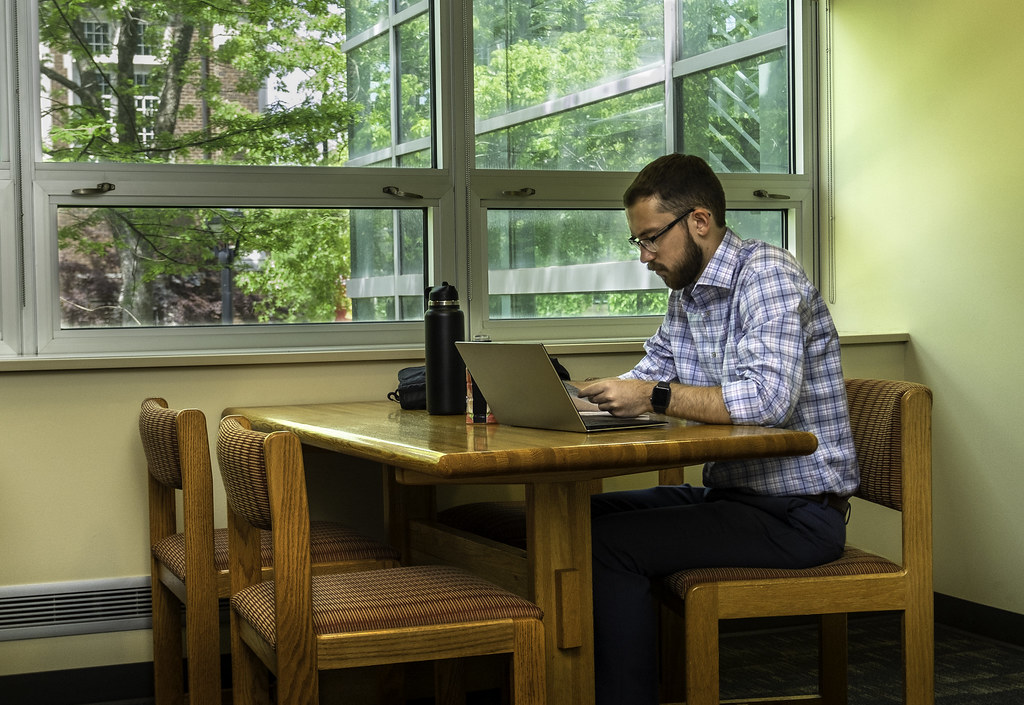
Learn how to prep for the ACT in less time with less stress. A smart study plan, recovery habits, and active recall tactics to avoid burnout.
You can ace the ACT and still have a life. The problem isn't that you aren't working hard enough — it's that most prep advice tells you to work in exactly the way that leads to exhaustion, careless mistakes, and a score drop right before test day.
The ACT packs four timed sections — English, Math, Reading, and Science — into less than three hours. When you try to master everything at once with marathon prep-book sessions, your brain taps out long before the material sticks. A burnout-proof approach does the opposite: shorter focused blocks, active recall instead of re-reading, and built-in recovery.
Table of Contents
- Summary
- Why does ACT prep lead to burnout so fast?
- How much should you actually study for the ACT?
- What does a burnout-proof ACT study plan look like?
- How do you study smarter, not longer, for each ACT section?
- Why is active recall more effective than re-reading prep books?
- How can you prevent mental exhaustion during ACT practice tests?
- What should you do when you feel burned out mid-prep?
- How does OneStudy help you prep for the ACT without burning out?
- Ready to start prepping without burning out?
Summary
According to UWorld's ACT Study Guide, an effective prep timeline spans about 6 to 8 weeks rather than a last-minute cram. Students on Reddit's ApplyingToCollege forum report that studying 1.5 hours a day is a common sustainable target. Research highlighted in Rahul Damania's Anti-Burnout Protocol emphasizes that sleep of 7–8 hours per night is non-negotiable for retention. The Three-Step Strategy from Scott H Young shows that using work/rest intervals like 45/10 helps you study hard without burning out. Finally, clinical guidance on burnout from Dr. Jennifer Olson-Madden notes that burnout manifests as full-body depletion, detachment and difficulty with basic tasks, not just tiredness.
Why does ACT prep lead to burnout so fast?
The ACT is designed to test endurance as much as content. Four different subjects, tight timing, and a 2-hour-55-minute run (plus an optional 40-minute Writing section) reward quick, accurate retrieval. Most students respond by doing everything at once: reading an entire prep book cover to cover, doing all four sections every night, and pulling long weekend sessions.
That pattern backfires. According to UWorld's ACT Study Guide, unstructured marathon studying is one of the fastest ways to stall progress, because you never give your brain time to consolidate what you learned. Passive strategies like re-highlighting English rules or re-reading math examples feel productive but don't build the retrieval strength you need under pressure.
⚠️ Warning: Burnout doesn't just make you feel bad — it directly hurts your score. Exhaustion increases careless errors, slows reading speed, and tanks motivation right when you need consistency.
The classic crash looks like this: Week 1 you are motivated and study 3-4 hours a day. Week 2 you dread opening the book, start making mistakes on questions you used to get right, and sleep poorly. Week 3 you skip days and then overcompensate with an 8-hour Sunday cram. That cycle is overtraining, under-recovery, and overstimulation — the exact trio flagged in Rahul Damania's burnout analysis for board exams.
If your notes, PDFs, screenshots of practice tests, and YouTube tutorials are scattered across your desk, the mental load gets even heavier. This is where OneStudy's Study Sets helps — you upload everything once and it turns into a single organized set with every study tool built in, so you stop wasting energy just organizing.
"Burnout isn’t just a bad day—it’s a full-body, full-mind depletion" — Dr. Jennifer Olson-Madden
How much should you actually study for the ACT?
You don't need 5 hours a day. You need consistency.
A realistic plan for most juniors and seniors is 6-8 weeks, 5-6 days per week, with 60-90 minute focused blocks. That 1.5 hours a day figure mentioned by students on Reddit is a good anchor because it's long enough to cover 2-3 weak topics deeply, but short enough to sustain alongside school.
🎯 Key Point: Total hours matter less than how you use them. 90 minutes of active testing beats 3 hours of passive re-reading.
So how do you set a burnout-proof limit?
Use the Three-Step Strategy described by Scott H Young:
1. Set a hard limit. Decide in advance when you start and stop. For example: 6:00-7:30pm, timer on. When it rings, you're done. This creates urgency and protects recovery time.
2. Focus on quality over hours. In that window, you do only high-value work: targeted practice and error review. No aimless page-flipping.
3. Plan recovery as part of the plan. Sleep, movement, and off-screen time aren't rewards — they are part of the study system.
When you have only 90 minutes, you naturally want to use them well. Instead of re-reading an entire chapter, you can turn that dense PDF chapter into a 15-minute podcast for your commute with OneStudy's AI Podcast Maker, then use your desk time for actual recall practice. That shift from consumption to retrieval is what makes consistency beat last-minute intensity.
"Find Peace Without Forcing Productivity" — Dr. Jennifer Olson-Madden
What does a burnout-proof ACT study plan look like?
Think in three phases, not just "do more practice tests."
Phase 1: Diagnose (Week 1)
Take one official practice test under real timing, from ACT's official test preparation resources. Then log your misses by topic — not just "I got Math wrong," but "systems of equations" or "comma splice." That diagnostic becomes your map.
💡 Tip: Track errors in a simple sheet: Section | Topic | Why I missed it | Fix. After one test, 70% of your future study should come from that sheet.
Phase 2: Learn (Weeks 2-5)
Don't hit all four sections daily. Pick 2-3 weak topics per week. For example: Week 2 = English: punctuation + subject-verb agreement + Math: triangle properties. Master the underlying rule, then do 20-30 timed questions only on that.
If you have messy class notes or a 40-page prep PDF, you don't need to rewrite it. Upload it to OneStudy's PDF Summarizer and OneStudy's Teach Me — Teach Me will turn your own material into a guided interactive lesson that highlights key terms inline and drops knowledge checks right into the lesson so you know you actually understood before moving on.
Phase 3: Practice + Review (Weeks 5-8)
One full practice test per week maximum. The magic isn't in taking the test — it's in the 90 minutes after, where you review every wrong answer out loud.
| Without a Plan | With a Burnout-Proof Plan |
|---|---|
| All 4 sections every day, no focus | 2-3 weak topics per week, deep work |
| Re-reading and highlighting | Active recall + error log |
| Full test every other day | 1 full test/week + daily 30-min targeted drills |
| Study until exhausted | 60-90 min blocks + planned recovery |
🔑 Takeaway: Your score improves fastest when you do less breadth per day but much more depth and review.
How do you study smarter, not longer, for each ACT section?
Each section punishes the same passive habit in a different way.
English: Learn rules in context. Don't memorize 50 grammar terms in isolation. Pull 10 real ACT English passages and rewrite the rule each time you miss one. For example, instead of "know comma splices," practice spotting them inside a full sentence and fixing them.
Math: Concepts first, then timed sets. The ACT Math tests Algebra 1, Geometry, Algebra 2, and a little trig and stats. If you miss a logarithm question, don't just drill 20 logs — learn what a log actually is, then drill. When you're stuck on a specific problem, OneStudy's AI Math Solver lets you snap a photo and see every intermediate step with reasoning, so you find the exact line where your working went wrong.
Reading & Science: Evidence-finding, not speed-reading tricks. Both sections are about locating evidence quickly under pressure. For Reading, practice asking "where did the author say that?" and underlining that line before answering. For Science, practice ignoring outside knowledge and treating graphs and tables as the source of truth.
🎯 Key Point: For Reading and Science, your job isn't to read faster — it's to know where to look.
OneStudy's AI Tutor can be grounded in your own uploaded ACT material, so when you ask "explain why this Reading answer is correct based on the passage," it answers from your actual practice test, not generic advice.
Why is active recall more effective than re-reading prep books?
Re-reading feels good because it's fluent. You recognize the rule and think "I know this." But recognition is not recall, and the ACT demands recall under time pressure.
The testing effect is simple: forcing yourself to retrieve an answer strengthens the memory trace far more than re-exposing yourself to it. When you do a quick quiz, you instantly see gaps — like thinking you know semicolon rules but missing them when the distractor looks plausible.
| Passive Review | Active Recall |
|---|---|
| Re-read prep book chapter | Close book, write 3 rules from memory |
| Highlight formulas | Generate own flashcards and self-grade |
| Watch YouTube solution | Do question first, then check explanation |
| Feels productive, low retention | Feels harder, high long-term retention |
💡 Tip: After studying a rule, wait 10 minutes, then try to teach it back in your own words without notes. If you can't, you haven't learned it yet.
Turning dense material into recall tools manually is exhausting though, which is why students quit. Upload your ACT chapter or lecture slides and let OneStudy's flashcard and quiz generator auto-generate a deck with images, diagrams, and LaTeX math included, then flip and self-grade from Unfamiliar to Mastered. Pair it with OneStudy's AI Quiz Generator for English, Math, Reading, and Science — it builds exam-grade multiple-choice questions with deliberately tricky distractors so you test real understanding, not just recognition.
For fill-in-the-blank sentence practice, OneStudy also has recall inside full sentences with lenient AI grading that forgives typos, so you practice terminology in context rather than as isolated words.
How can you prevent mental exhaustion during ACT practice tests?
A full ACT is mentally draining by design. Simulating that stress is useful, but doing a full test daily is a fast track to burnout described in Rahul Damania's protocol: overtrained, under-recovered.
Here's a sustainable approach:
1. Simulate, but with breaks. Do your weekly full test with the official ACT timing and break structure, exactly as listed on ACT's official preparation page. Water, snack, stand up. Train your brain to reset between sections.
2. Use work/rest intervals for daily study. According to The Three-Step Strategy to Study Hard Without Burning Out, 45/10 or 50/10 intervals protect focus. Study for 45-50 minutes with phone away, then 10 minutes completely off-screen: walk, stretch, look out the window. No doom-scrolling — that's still stimulation.
3. Protect the three pillars. The Anti-Burnout Protocol flags three pillars that apply perfectly to ACT prep:
- Fortify your mind: 5 minutes of mindfulness or breathing before a session lowers perceived stress.
- Optimize your body: 7–8 hours of sleep is non-negotiable for retention. Sleep is when your recall practice consolidates.
- Study smarter: space out full tests and prioritize deep error review.
🔑 Takeaway: Screen fatigue is real. If your eyes are tired after 2 hours of prep-book PDFs, switch modality instead of quitting.
This is where auditory tools prevent burnout without losing progress. Upload your review sheets to OneStudy's Text-to-Speech Reader to listen while following along with highlighted words, or turn them into a natural-sounding podcast with OneStudy's AI Podcast Maker for walks, the gym, or your commute. You are still studying, but you give your eyes and focus systems a break.
What should you do when you feel burned out mid-prep?
You will feel it at some point — dread before opening your prep book, a wave of careless errors, trouble falling asleep because you're replaying questions, or feeling detached from why this score even matters. Those are classic signals noted in work on burnout and Acceptance and Commitment Therapy approaches and the clinical overview of ACT for burnout.
⚠️ Warning: If you notice detachment, constant irritability, or sleep disruption for more than a few days, that's not laziness — it's your system asking for recovery.
Acceptance, not fight
Acceptance and Commitment Therapy (ACT) for burnout suggests a counterintuitive move: notice exhaustion without fighting it. From Dr. Olson-Madden's guide, the steps are:
1. Name it: "I'm having the thought that I'll never raise my math score. I'm feeling burned out." 2. Make space: Allow the fatigue to be there without arguing with it or forcing more hours to prove you are motivated. 3. Refocus on values: Why do you care about the ACT beyond the number? A college path, scholarships, proving to yourself you can master this? Values keep you moving when motivation dips.
💡 Tip: Write a 2-sentence values statement and tape it to your desk: "I'm prepping because X matters to me, not just to avoid fear."
Tactical reset for the next 48 hours
- 24-hour no-ACT break. No practice questions, no videos. Completely off.
- Shorten sessions to 30-40 minutes for 2 days, and switch modality. If you were reading, listen. If you were drilling math, watch an interactive lesson.
- Ask for a second explanation. Stuck at 2am on a grammar rule? Instead of spiraling, ask OneStudy's AI tutor grounded in your own notes to explain it a different way, with an example from your practice test.
"Specific ACT components such as experiential avoidance, values, defusion, and committed action are addressed, to provide you with effective tools to help alleviate burnout" — Association for Contextual Behavioral Science
How does OneStudy help you prep for the ACT without burning out?
Burnout in ACT prep often comes from three hidden time-wasters: organizing material, passively consuming it, and not knowing what to fix. OneStudy was built to remove all three.
Stop wasting hours organizing. Upload your messy notes, prep-book PDFs, lecture slides, screenshots of missed problems, audio explanations, or YouTube ACT strategy videos once. OneStudy's Study Sets turns them into a single organized set containing every study mode — Notes, Flashcards, Multiple Choice, Fill in the Blanks, Written Test, Final Test, Podcast and Teach Me — with mastery tracked across all of them.
Actually understand math and grammar fast. Re-reading doesn't build understanding. OneStudy's Teach Me is the flagship for this exact problem: it turns your own ACT material into a guided, structured interactive lesson that teaches you step by step, highlights key terms inline, and drops multiple-choice and fill-in checks right into the lesson so you prove you understood each part before moving on. It's like replacing a missed lecture with a private tutor.
Study without screen fatigue. When you hit that wall where you can't look at another PDF, OneStudy's Podcast Maker turns your ACT review sheets into an engaging, natural-sounding podcast you can listen to hands-free on a walk, while driving to school, or at the gym. Studying finally fits into dead time you already have.
Find weak spots in minutes not hours. Instead of manually making 100 questions, OneStudy's quiz generator builds exam-grade MCQs with deliberately plausible distractors for English, Math, Reading, and Science, plus mastery badges showing exactly which topics still need work. Then use OneStudy's AI Test Maker to build a full mock exam mixing multiple choice with free-response, get instant rubric-based feedback, and review every question with the tutor.
For math-heavy misses, OneStudy's Math Solver shows every intermediate step from a photo of your work, and for dense reading-heavy chapters, the PDF Summarizer and Video Summarizer condense a long chapter or YouTube lecture into clear summary notes and immediately turn them into practice material.
🎯 Key Point: The goal isn't to study less overall — it's to make every minute you do study count toward retrieval, not just recognition.
Ready to start prepping without burning out?
The ACT rewards focused, consistent retrieval — not heroic cram sessions that leave you exhausted. Build your plan around 6-8 weeks, 60-90 minute blocks with 45/10 or 50/10 rest, one full practice test per week with deep error analysis, and 7-8 hours of sleep that you treat as non-negotiable.
When you feel burnout creeping in, name it, reset for 24 hours, switch modality from reading to listening, and refocus on why this matters beyond the score.
If you want to skip the busywork of turning scattered ACT materials into all that recall practice, try OneStudy for free. Upload what you already have — your prep book PDF, class notes, or practice test screenshots — and let OneStudy build your Study Set with flashcards, tricky quizzes, podcasts, and Teach Me lessons grounded in your own syllabus. You keep the high-value work (learning and reviewing), OneStudy handles the organizing and generating, so you can prep hard without burning out.
Start free at OneStudy's signup and build your burnout-proof ACT set today.
Ready to put this into practice? OneStudy's AI study tool turns your own notes, PDFs, lecture slides, and videos into interactive Teach Me lessons, flashcards, quizzes and mock exams, and even a study podcast you can listen to on the walk to class — so you spend your time on active recall instead of busywork. Start studying free.
Sources
- UWorld's ACT Study Guide
- Three-Step Strategy to Study Hard Without Burning Out - Scott H Young
- How to Use Acceptance Techniques for Burnout - Dr. Jennifer Olson-Madden
- How to avoid burnout while studying for the USMLE - Rahul Damania
- ACT Test Prep - ACT.org
- ACT Treatment Interventions for Burnout - Association for Contextual Behavioral Science
- How many hours a day should one spend on ACT studying - Reddit r/ApplyingToCollege
Image credits
Photographs in this article are Creative-Commons or public-domain images, used under the licences linked below.
Stop studying harder. Start studying smarter.
Drop in your notes, PDFs, slides, or a lecture video and OneStudy instantly builds the flashcards, quizzes, and a 24/7 AI tutor that turn this advice into active practice.
Start studying free →No credit card · Used by students at leading universities
Related articles

9 Science-Backed Study Techniques That Actually Work (And How to Make Them Stick)
Stop re-reading and highlighting. These 9 research-backed study techniques use active recall and spaced repetition to help you learn faster and remember longer.
10 Best AI Study Tools for College Students in 2026
We tested the top AI tools for 2026. Here are the 10 best AI study tools for college students that actually save time, improve grades, and keep you ethical.